Best Education Robot for AI Agent Explained 2026
OpenClaw has taken off worldwide. Developers are “raising lobsters” on their computers — deploying an agent that can call tools on its own, work with files, and send email. The excitement around OpenClaw comes from a simple shift: AI that does not just chat, but actually gets work done.
Most of that work still happens on a screen. Hiwonder is taking the next step: putting OpenClaw’s “brain” inside a physical robot — ROSOrin Pro — so the same kind of agent can act in the real world.
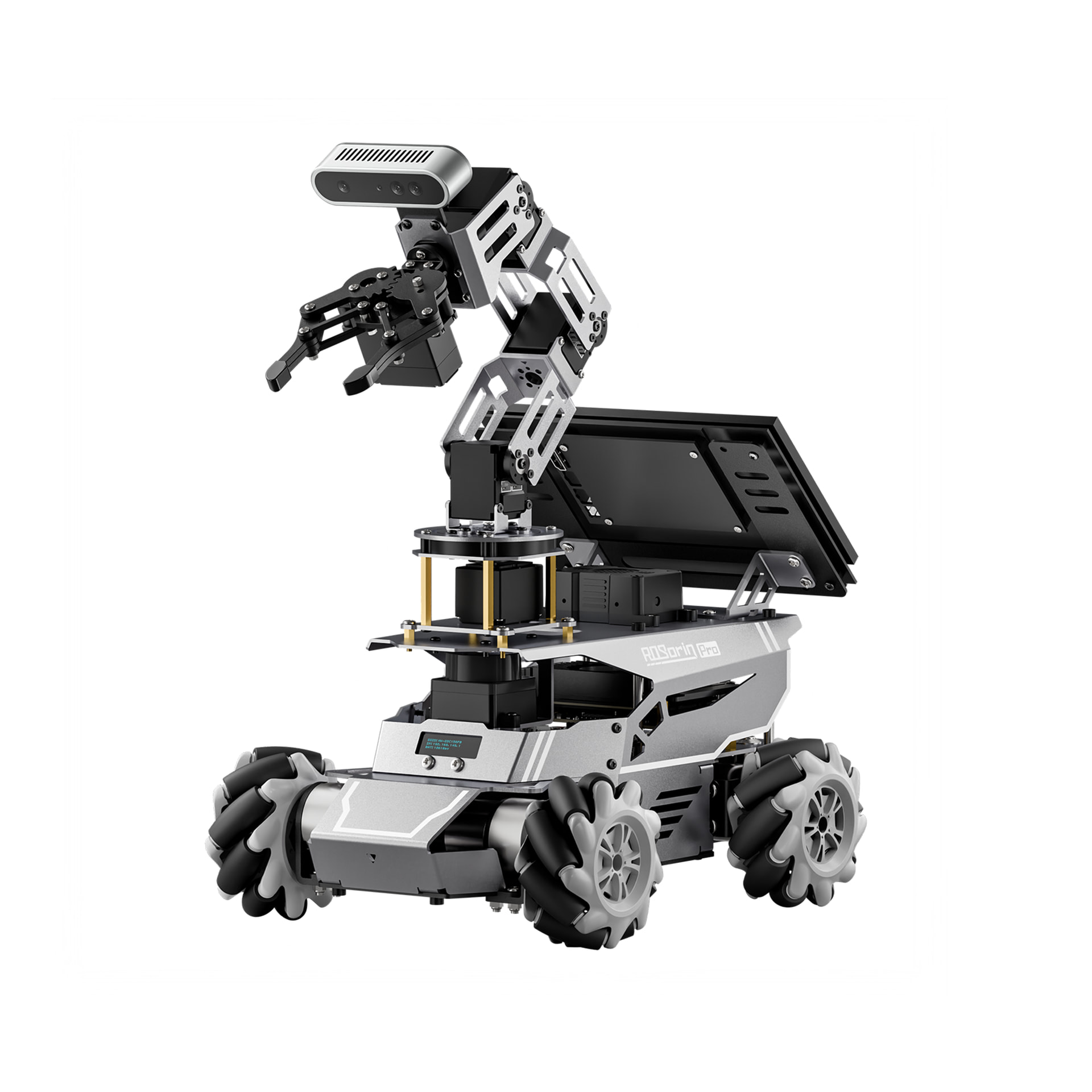
1. From digital employee to physical helper
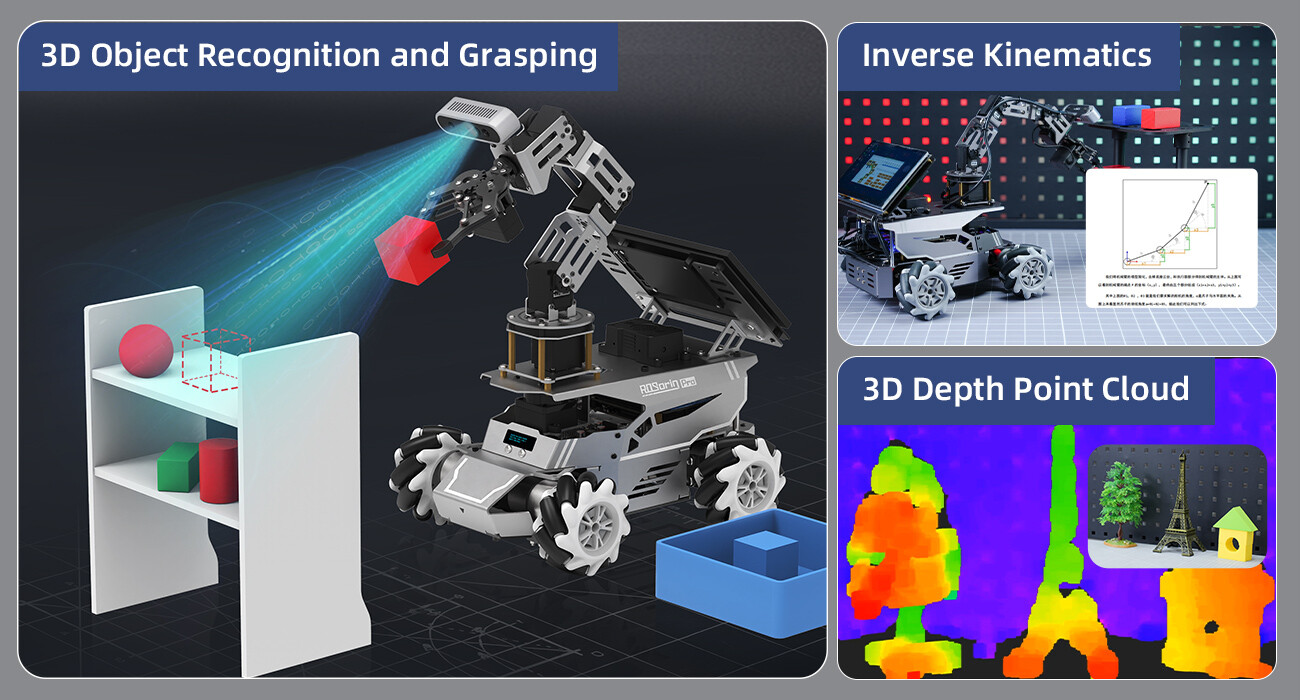
ROSOrin Pro is Hiwonder’s composite robot platform for advanced ROS education. It is built around an NVIDIA Jetson-class controller, can run multimodal large models locally, and carries a full sensing stack: a 3D depth camera, TOF LiDAR, and an AI voice module. A 6-DOF arm gives it a capable “hand.” That hardware is a natural home for OpenClaw.
Once OpenClaw is on board, ROSOrin Pro is no longer just a machine waiting for a command. It becomes a remote, autonomous execution system — something that can take a goal, figure out the steps, and carry them out.
2. Hands, eyes, and brain working together
The combination gives the robot a kind of cross-media scheduling. A user can speak from far away, tap an app, or talk to the robot in person. OpenClaw unpacks the request, builds the low-level plan, and closes the loop in the physical world.
That opens up some practical — and fairly ambitious — uses:
- Warehouse-style sorting. Receive a remote instruction, pick and sort objects on its own, then send back a structured report.
- Long-running tasks. Turn a fuzzy voice request into a timed sequence of actions and finish the chain without someone standing over it.
- A business-style assistant. Filter a pile of information down to the points that matter, or take photos, recognize objects, and generate a multimodal report.
To show how tightly OpenClaw can work with the robot’s sensors — and how multimodal models can sit on top of SLAM navigation and transport — Hiwonder walks through a mock neighborhood service scene. In the story, the robot runs the whole sequence with no human steering.
Scene 1 — Pick up the fruit
The user says: “I ordered some fruit online. Go to the supermarket and pick it up. The pickup code is 1188.”
OpenClaw first parses the request and pulls out the key pieces: the goal (get the fruit), the place (the supermarket), and the code (1188). The robot starts SLAM navigation and plans a path to the preset “supermarket.” When it arrives, the 3D depth camera scans the shelves. A vision model confirms the pickup-code label. The arm grabs the fruit and carries it home.
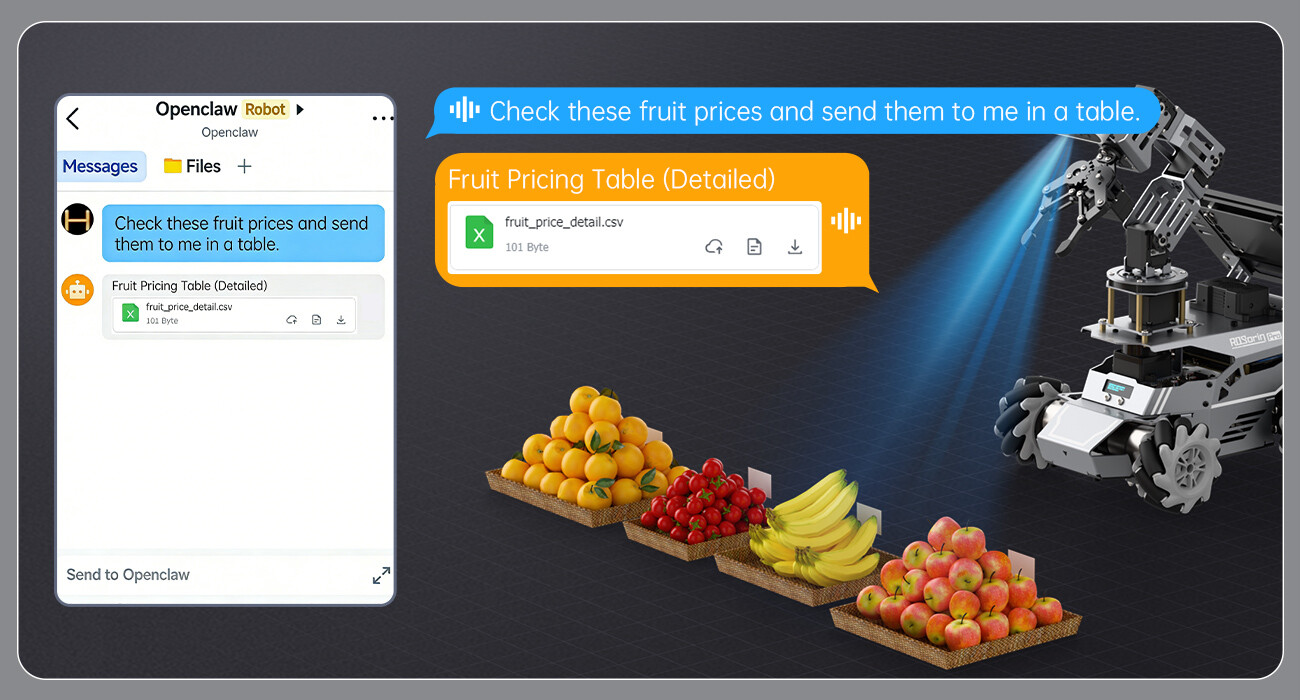
Scene 2 — Pick up a package
Next, the user adds a new job: “Also grab a package for me. The tracking number is 311W-WBD01G.”
OpenClaw takes the new instruction on the fly, adds it to the queue, and keeps the context. The robot replans a path to the parcel point, uses the vision model to read the tracking label, confirms a match, and picks up the package. The point of the scene is interruption handling and continuous planning — not a single frozen script.
Scene 3 — Find the dog
Then: “Go find where the dog is, and send me a photo.”
OpenClaw switches the task to “find this target.” The robot patrols the neighborhood, using the depth camera to recognize objects. When it spots the dog, it takes a photo and sends the image to the user’s phone over the network.
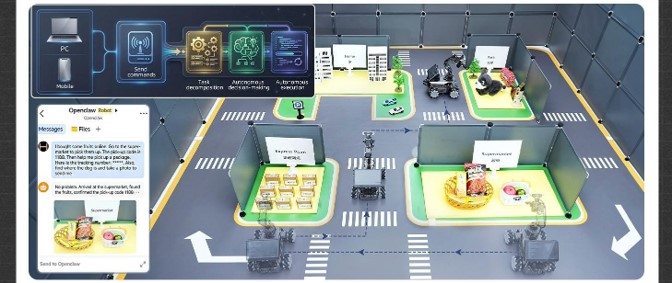
Scene 4 — Head home
Finally: “Head home.” OpenClaw treats the earlier jobs as done, plans a return path to the start, and reports how the run went.
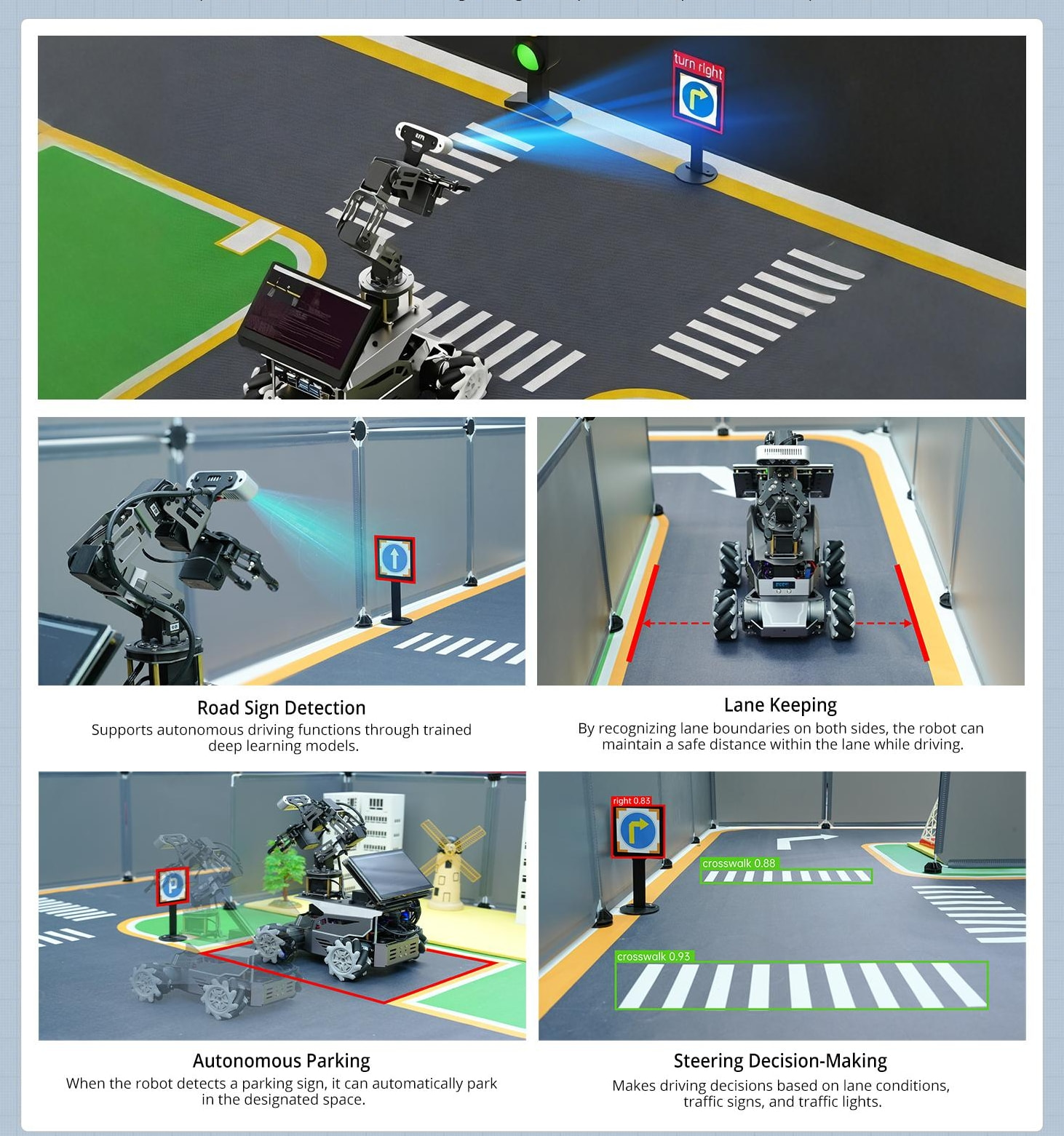
Under the hood, the post describes a familiar embodied-AI stack: unstructured language is broken into action primitives; multi-point navigation is combined with scene understanding so the robot can read landmarks and other semantic cues; live sensor data is gathered into structured facts the planner can use; and a task-logic layer checks the chain of thought so long instructions do not fall apart. Put together, that is autonomous navigate-and-carry: find a target in 3D space, replan as the world changes, grasp, and deliver — without someone driving every step.
3. Teaching the stack, not just showing a demo
Students can learn dedicated coursework: installing and configuring OpenClaw, binding tools, then moving on to 3D intelligent sorting and SLAM-based transport. The goal is a full path from agent setup to real use on the robot.